By Kim Oldham | October 2025
Adult Learning | Cognitive Growth | Professional Development
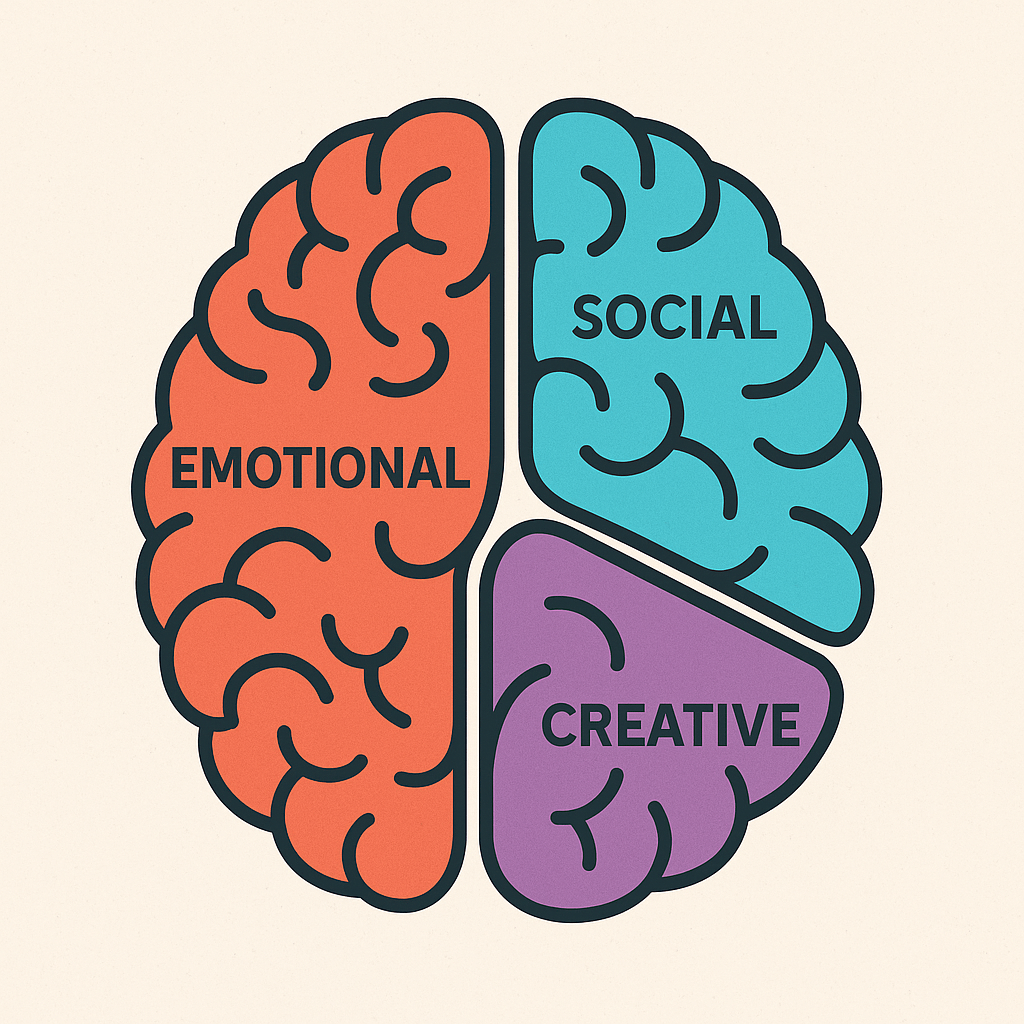
When we think of intelligence, we often picture IQ tests and academic achievement. But in adult education and especially in professional fields like Medical Esthetics, intelligence extends far beyond that. Emotional, social, and creative intelligence each play a vital role in how we teach, learn, and connect with others.
💖 Emotional Intelligence (EQ)
What it is:
Emotional intelligence is the ability to understand and manage emotions, both your own and others.
- Self-awareness: Recognizing your emotions and triggers.
- Self-regulation: Staying calm and focused under pressure.
- Motivation: Finding inner drive to learn and improve.
- Empathy: Understanding and relating to others feelings.
- Social skills: Building healthy communication and trust.
Why it matters:
Emotionally intelligent learners manage stress, stay motivated, and build supportive peer relationships. Instructors with strong EQ create safe, encouraging classrooms where adults feel respected and capable.
🩵 Example: During a client day, a student notices that a peer seems nervous and offers calm reassurance, transforming a moment of tension into a moment of teamwork and support.
🤝 Social Intelligence
What it is:
Social intelligence is the ability to understand people, interpret social cues, and build positive relationships. It helps learners adapt to different personalities, group settings, and professional environments.
Key traits:
- Awareness of group dynamics
- Strong communication skills
- Empathy and cooperation
- Adaptability in diverse situations
Why it matters:
Adult learning often happens in groups. Social intelligence helps learners navigate collaboration, conflict, and leadership. It’s especially important in service, based industries like Esthetics, where clear communication and trust are essential.
🩶 Example: A student adapts their communication style to suit a client’s personality, friendly and conversational for one, calm and professional for another, while maintaining respect and boundaries.
🎨 Creative Intelligence
What it is:
Creative intelligence is the ability to think outside the box, solve problems in new ways, and generate innovative ideas.
Core elements:
- Imagination: Seeing new possibilities.
- Innovation: Turning ideas into practical action.
- Adaptability: Adjusting quickly to challenges.
Why it matters:
Creativity fuels progress. Adult learners with creative intelligence explore, experiment, and connect concepts in new ways. For educators, supporting creativity means encouraging curiosity, flexibility, and open-mindedness.
💜 Example: An Esthetics student designs a customized skincare plan for a client with multiple skin conditions, combining product knowledge, treatment protocols, and insight.
🧠 The Complete Picture
These three forms of intelligence work together:
- Emotional intelligence helps learners connect inwardly.
- Social intelligence helps them connect outwardly.
- Creative intelligence helps them innovate and grow.
When educators nurture all three, they develop learners who are not just knowledgeable but confident, compassionate, and adaptable professionals ready to thrive in their industry.
✨ Final Thought
True intelligence is not just what we know, it’s how we understand, relate, and create.
By supporting emotional, social, and creative growth, educators empower adults to learn with heart, think with curiosity, and lead with purpose.






 Skincare & Education by Kim Oldham