By Kim Oldham | October 2025
Medical Esthetics | Adult Learning | Innovation
Artificial Intelligence, Augmented Reality, and Virtual Reality are revolutionizing how we teach, learn, and practice Medical Esthetics. Here’s how these tools are shaping my classroom, improving client care, and giving businesses a competitive edge in this rapidly evolving industry.
🌍 The Digital Shift in Esthetics
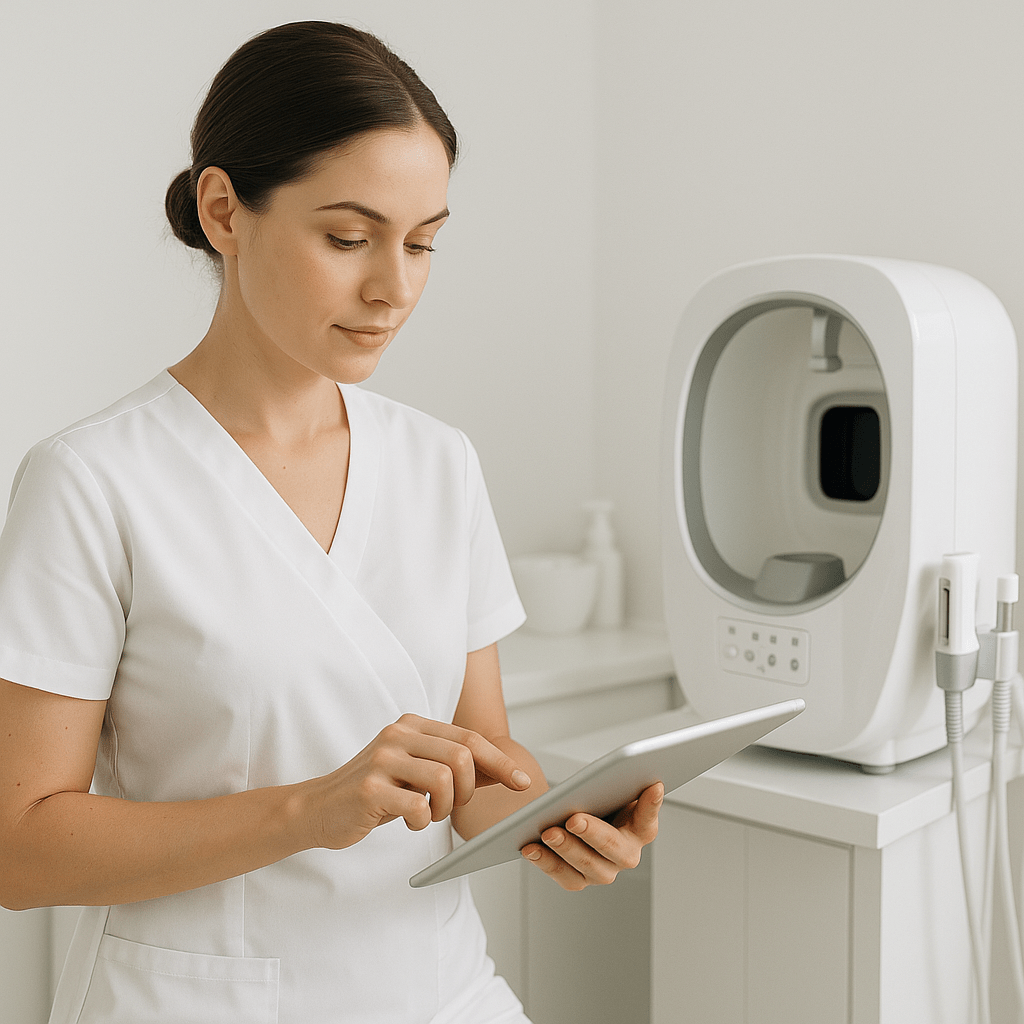
The world of Medical Esthetics is evolving at lightning speed. What once relied solely on hands-on training and textbooks is now merging with cutting-edge technology. Tools like AI (Artificial Intelligence), AR (Augmented Reality), and VR (Virtual Reality) are no longer futuristic ideas, they’re here, transforming how we assess, teach, and perform treatments.
Today’s students are part of a generation that thrives in digital environments. They crave interactive, tech-driven education that feels as advanced as the industry they’re entering. As an instructor, I see this shift as an exciting way to blend traditional Esthetic skills with today’s modern technology.
🧠 AI: The Smart Skin Analyzer

AI technology is quickly becoming one of the most valuable tools in Medical Esthetics. Systems like VISIA or OBSERV 520x use AI to analyze a client’s skin for conditions like pigmentation, texture, wrinkles, and hydration.
In my classroom, introducing this technology helps students see the science behind their work. When a machine scans a face and identifies underlying issues invisible to the eye, it deepens understanding. It’s no longer just about “treating what you see,” but learning how data supports customized treatment plans.
For clients, AI skin analysis builds trust, it provides visible proof, measurable progress, and tailored care plans that feel both high-tech and personal. For businesses, it adds credibility and helps create a professional edge that clients notice.
🌈 AR: Seeing Skin Through a New Lens

Augmented Reality (AR) brings the skin to life. After an AI scan, AR technology can project results directly onto the client’s face. Imagine being able to show clients where sun damage or dehydration lies beneath the surface of the skin, it changes the way consultations happen.
In education, AR helps students connect theory to practice instantly. They can visualize layers of the skin, identify conditions, and discuss treatment options interactively. It’s a fun, visual way to reinforce knowledge that students (and clients!) remember.
🕶️ VR: Safe Practice in a Virtual World

While Virtual Reality (VR) is still emerging in Medical Esthetics education, it’s already making waves. Imagine students practicing client consultations or laser treatments in a realistic 3D environment completely risk-free.”VR provides realistic, hands-on scenarios where learners can build confidence before ever touching a real client.
This technology enhances safety, boosts self-assurance, and prepares students for real-world pressure. For educators, it means a more dynamic, engaging way to teach and for students, it’s an unforgettable experience that builds both skill and confidence.
💼 Why This Matters for Clients, Businesses, and Educators

- For Clients: AI and AR make consultations more transparent and customized, helping them understand their skin and trust their treatments.
- For Businesses: These tools set clinics apart, allowing them to showcase advanced technology and offer a premium, data-driven experience.
- For Educators: Technology enhances engagement, visual learning, and professional readiness. It connects theory with modern practice which is something every Medical Esthetics student needs in today’s job market.
🧑🏫 How I’m Adapting My Teaching
To stay aligned with industry growth, I would love to bring these innovations directly into my classroom:
- Introducing AI and AR skin analysis modules so students can interpret digital scan results with confidence.
- Using VR simulations for consultation practice and laser-safety scenarios.
- Partnering with local clinics and vendors to keep training up-to-date.
- Encouraging students to reflect on how technology supports client communication, accuracy, and confidence.
This shift means my students aren’t just learning Medical Esthetics, they’re learning how to lead in a tech-driven industry.
🌟 Final Thoughts
Technology integration is redefining Medical Esthetics education. It’s fast-paced, exciting, and full of opportunity. For me as an educator, it means continuously evolving, combining traditional hands-on practice with innovation to prepare students for a future where technology and human touch work hand in hand.
By embracing AI, AR, and VR, we’re not just keeping up with the industry, we’re helping shape it. And that’s what makes teaching in this field so rewarding.
 Skincare & Education by Kim Oldham
Leave a comment